
Dayu Electronics: How a 360° Horizontal, Blind-Zone-Free Multibeam Underwater Acoustic Transducer Is Achieved
In fields such as autonomous underwater navigation, robotic operations, and marine environmental monitoring, omnidirectional perception of the surrounding environment without blind zones is the cornerstone of safety and efficiency. Traditional directional ultrasonic sensors, limited by their beam angles, have detection blind spots and require mechanical rotation or multi-probe arrays to achieve circumferential coverage, increasing system complexity and the risk of failure. The advent of Dayu Electronics' ultrasonic multibeam underwater obstacle avoidance sensor is intended to fundamentally solve this problem, and the key to its wide-area detection lies in the core acoustic component—the horizontally omnidirectional cylindrical underwater acoustic transducer.
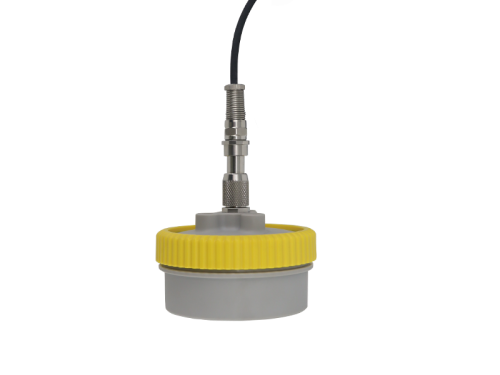
“What is the emitting surface of this horizontally omnidirectional cylindrical underwater acoustic transducer like?”
The core structural design of this transducer abandons the traditional planar or focused emitting surface and adopts a unique cylindrical structure. This innovation in physical shape directly determines its acoustic radiation characteristics. Its emitting surface (i.e., the acoustic radiating surface) is the entire lateral surface of a cylinder around the central axis, rather than a single plane pointing in a specific direction.
It is precisely this cylindrical emitting surface structure that endows the transducer with revolutionary performance: it achieves 360° full coverage for both transmission and reception in the horizontal direction. This means that acoustic energy can be radiated uniformly in all horizontal directions, while also receiving echo signals from any horizontal direction. This completely breaks the directional limitations imposed by the beam angles (such as 30° or 60°) of ordinary transducers, enabling a single transducer element to monitor the entire horizontal circumferential environment.

This horizontally omnidirectional design brings significant advantages to the multibeam underwater obstacle avoidance sensor:
1. Eliminates horizontal blind zones: Horizontal panoramic monitoring is achieved without the need for rotating mechanisms or complex arrays, greatly simplifying the system structure and improving reliability.
2. Enhances detection efficiency: A single transmission covers the entire horizontal plane, enabling rapid detection and tracking of dynamic targets (such as obstacles from any direction).
3. Improves environmental adaptability: Particularly suitable for scenarios requiring continuous, omnidirectional surveillance of the surrounding environment, such as autonomous obstacle avoidance for underwater robots, underwater security perimeter monitoring, and port/ship collision avoidance.
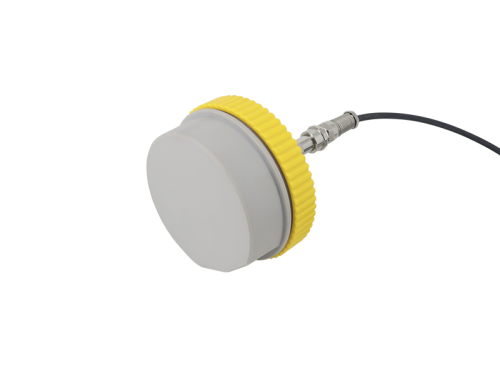
It should be noted that the horizontally omnidirectional transducer solves the problem of horizontal coverage. In the vertical direction, however, its beam typically still has a certain opening angle (for example, forming a horizontal “pancake”-shaped detection zone). A complete “multibeam” obstacle avoidance system often integrates multiple such transducers, or combines transducer arrays with different tilt angles in the vertical direction, to build a three-dimensional spatial perception network.
The horizontally omnidirectional cylindrical underwater acoustic transducer, with its innovative cylindrical emitting surface structure, achieves 360° omnidirectional acoustic coverage in the horizontal plane. It is the cornerstone for building high-performance, high-reliability ultrasonic multibeam underwater obstacle avoidance sensors. It transforms complex mechanical scanning into elegant electronic perception, equipping underwater equipment with truly “blind-zone-free” keen eyes, and drives underwater detection technology toward a more integrated and intelligent direction.