
360° Acoustic Coverage of Horizontally Omnidirectional Underwater Acoustic Transducer [Dayu Electronics]
In the pitch-black underwater world, a horizontally omnidirectional underwater acoustic transducer acts like a 360° rotating 'acoustic lighthouse,' radiating ultrasonic waves uniformly in all directions—its secret lies in the piezoelectric ceramic array. Multiple piezoelectric ceramic elements are arranged in a ring, and through synchronized vibration, they convert electrical energy into mechanical energy, driving the water medium to form a horizontally dead-zone-free acoustic radiation. This design makes the sound waves spread horizontally like ripples on the water surface, covering the entire plane, making it perfectly suitable for full-area scanning scenarios such as sonar detection and underwater robot navigation.
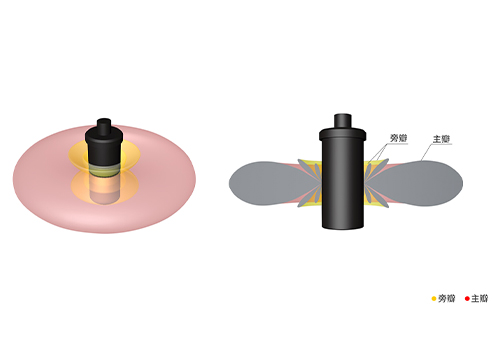
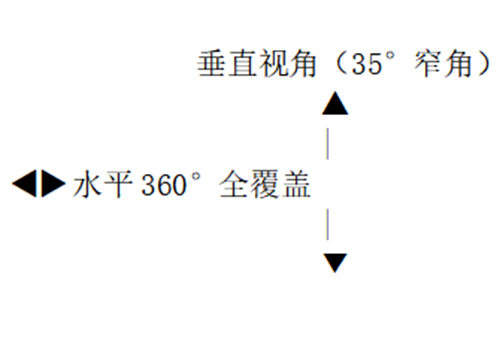
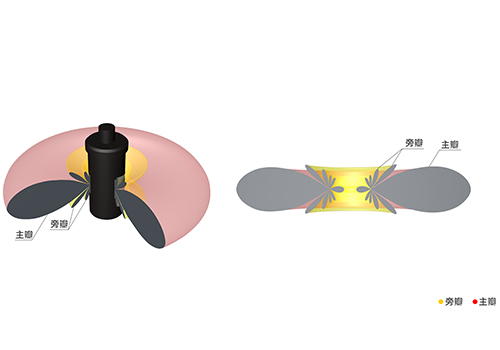
However, its 'omnidirectionality' is limited to the horizontal plane. In the vertical direction, the sound waves are confined to a narrow angle of about 35° (as shown in the figure), resembling a flat energy disk—with the highest sound pressure at the center, rapidly attenuating upward and downward. This characteristic avoids ineffective vertical scattering while concentrating energy to enhance horizontal detection range. For example, in seabed topographic mapping, the transducer can simultaneously monitor echoes from surrounding reefs without interference from surface vessel clutter.
Schematic diagram of sound wave energy distribution
Engineers often use low-frequency sound waves (e.g., 10 kHz) for ultra-long-distance communication—sound waves experience minimal loss in water and can penetrate several kilometers. Currently, such transducers are widely used in marine ranch fish monitoring, shipwreck search, and other fields, becoming the 'all-around ears' of the underwater world.
Note: In practical applications, attention should be paid to the impact of water turbidity on acoustic attenuation. In clear water, the detection range can be more than three times that of turbid water.