
Key Points for Achieving Accurate Positioning and Speed Measurement System within 15cm | Dayu Electronics
To implement a positioning and speed measurement system based on a circular planar array, using 50mm, 300kHz ceramic discs as transducers, and meeting specific receiving sensitivity and acoustic source beam focusing requirements, while keeping the diameter within 15cm and constructing a phased array, multiple factors need to be comprehensively considered. The following is a general design approach and key technical points:
1 Transducer Selection
Ceramic disc transducer: Select a 50mm diameter, 300kHz frequency ceramic disc transducer, ensuring efficient acousto-electric conversion efficiency at the operating frequency.
Sensitivity: Ensure the transducer's receiving sensitivity is greater than -190dB, in order to detect weak acoustic signals.
2. Array Design
Circular planar array: Design a circular planar array composed of multiple ceramic disc transducers, with the array diameter not exceeding 15cm.
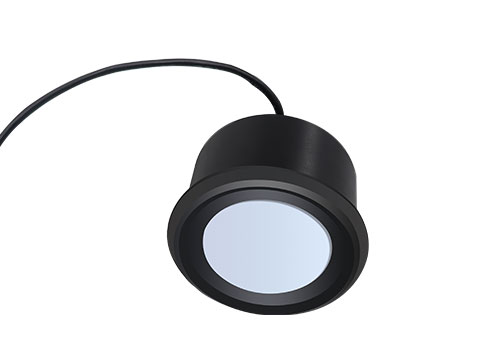
Array element spacing: Calculate and determine the optimal spacing between array elements (i.e., ceramic discs) based on the operating frequency and wavelength, to optimize beamforming and directivity.
3. Phased Array Technology
Beamforming: Achieve beam directivity control and focusing by controlling the phase and amplitude of each transducer.
Signal processing: Employ digital signal processing techniques to filter, enhance, and perform positioning calculations on received signals.
4. Positioning and Speed Measurement Algorithms
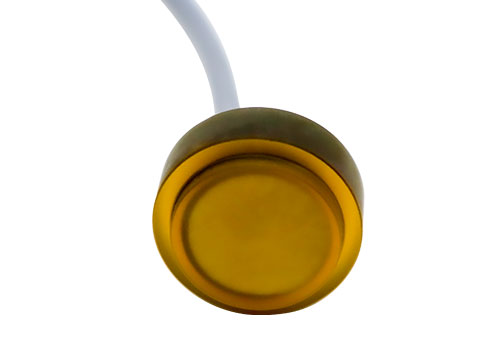
Time Difference of Arrival (TDOA): Utilize the time differences in signal arrival at different transducers to calculate the acoustic source position.
Doppler effect: Calculate the acoustic source velocity by measuring changes in signal frequency.
5. System Integration and Testing
Hardware integration: Integrate the transducer array, signal processing circuitry, and control unit into a compact system.
Software development: Write control software to implement phased array beam control, signal processing, and positioning/speed measurement algorithms.
System testing: Test system performance in real-world environments, including positioning accuracy, speed measurement accuracy, and anti-interference capability.
Precautions
Environmental adaptability: Consider the system's performance under different environmental conditions, such as temperature, humidity, and noise.
Calibration and maintenance: Regularly calibrate and maintain the system to ensure consistent transducer performance and array integrity.
Conclusion
Designing a positioning and speed measurement system that meets the above requirements is a complex and meticulous task, requiring comprehensive consideration of hardware, software, and algorithms. Through rational array design, application of phased array technology, and precise positioning and speed measurement algorithms, efficient and accurate acoustic source localization and speed measurement can be achieved.