
Dayu Electronics: How to Read the Range of an Underwater Obstacle Avoidance Sensor? What Does 0.005-0.3m Mean?
Many customers who receive Dayu Electronics' underwater obstacle avoidance sensor will stare at the line "Recommended range: 0.005-0.3m" on the parameter sheet and wonder — how is this range derived? Why can the shortest measurement only be 0.005m, and the farthest only 0.3m? Today, Dayu Electronics will explain this thoroughly.
Let's start with the conclusion: this range refers to the measurement range within which this 10MHz transducer can operate stably for distance measurement in clean water under normal conditions. Here, 0.005m is the blind zone, and 0.3m is the maximum measurement distance.
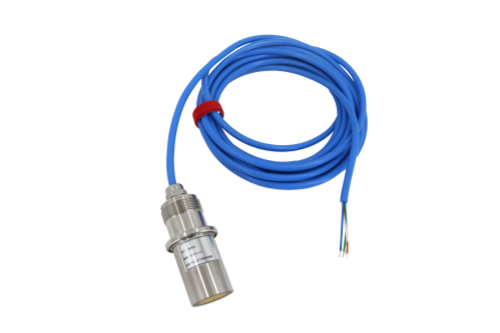
Let's first discuss the blind zone. 0.005m, which is 5 millimeters, represents the closest distance the sensor can measure to the target object. Because after the transducer emits ultrasonic waves, it needs an extremely short time to switch from transmitting state to receiving state. During this switching instant, the echo signals are mixed together and cannot be distinguished. 5 millimeters is the minimum measurable distance corresponding to this transition process. Below this distance, the echo and transmitted signals will overlap, making the measured data unreliable.
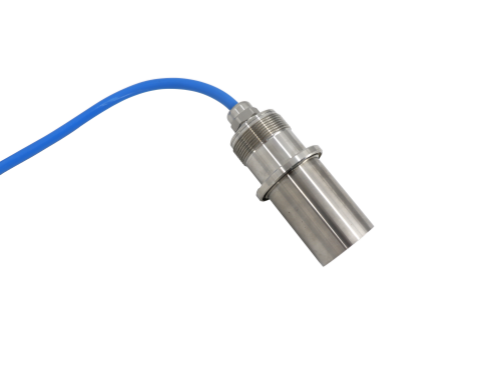
Now let's look at 0.3m. This is the farthest distance the sensor can stably measure in clean water. Ultrasonic waves attenuate as they propagate through water — the farther the distance, the weaker the echo signal. At around 0.3m, the signal strength has attenuated to a level where it can no longer be stably and reliably received and identified. Therefore, 0.3m is the effective upper limit of this sensor under normal clean water conditions.
It is necessary to emphasize two prerequisites here: one is "clean water" — the water should not contain too many impurities or bubbles, otherwise the ultrasonic waves will be scattered and absorbed, reducing the actual range; the other is "normal conditions" — because water quality, temperature, and the material and angle of the target's reflective surface can all affect the actual measurement distance.
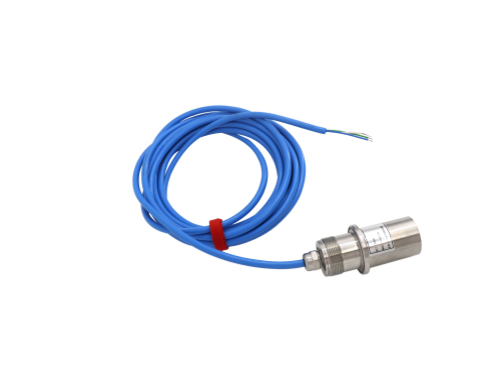
So next time you see "Recommended range: 0.005-0.3m," you'll understand — this is not arbitrary; it is a reliable working range based on the actual performance of the 10MHz transducer in clean water. When used within this range, the measurement results are the most stable and reliable. Beyond this range, it doesn't mean measurement is completely impossible — it just means we can no longer guarantee the accuracy and consistency of the data.